
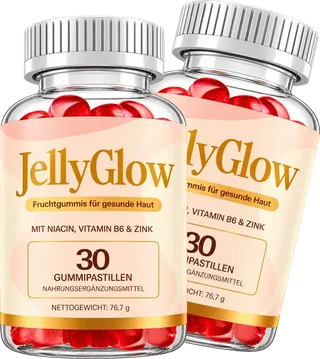
JellyGlow Gummies are a fruit-gummy food supplement with nine listed actives, and several of those ingredients have known interactions with prescription medicines. No one has tested JellyGlow Gummies drug interactions directly, so this page maps each listed ingredient to the medicines official sources mention, so you can take a short, specific list to your pharmacist. Never stop or change a prescribed medicine because of anything you read here.
Do JellyGlow Gummies interact with medications?
They may, because several listed ingredients have interactions on record in official sources, although the finished gummy itself has not been tested. NCCIH warns that some medication–supplement interactions can be serious.6
The label is clear about this. It asks you to consult a physician before use, especially if you take a medication, have a medical condition or are under medical supervision. Use this page as the homework for that conversation, not as a replacement for it.
Which ingredients have known interactions?
Five of the nine listed actives have interactions mentioned in our sources: Panax ginseng, rhodiola, zinc, vitamin B6 and carnitine. This table matches each one with the medicines or situations named.
| Ingredient (per gummy) | Amount | Medicines or situations named in official sources |
|---|---|---|
| Panax ginseng root 20:1 extract | 2 mg | Diabetes medicines (may lower blood sugar); blood clotting and some medicines1 |
| Rhodiola rosea root 20:1 extract | 1 mg | Losartan, a blood pressure medicine2 |
| Zinc | 1.5 mg | Quinolone and tetracycline antibiotics, penicillamine, thiazide diuretics3 |
| Vitamin B6 | 2 mg | Cycloserine; some epilepsy drugs4 |
| L-Carnitine | 25 mg | Some anticonvulsants lower carnitine levels5 |
The amounts come from the label. The interaction findings come from research and reports on the ingredients, often at larger doses and in other forms, so they flag a question rather than predict a reaction to this gummy.
What should you ask about ginseng and diabetes or blood thinners?
Ask whether the ginseng in the gummy matters alongside your blood sugar medicine or anticoagulant. NCCIH says Asian ginseng may lower blood sugar and may interfere with blood clotting and with some medicines.1
Each gummy lists 2 mg of a 20:1 Panax ginseng extract, which is a small amount, but the pharmacist is the right person to weigh it against your dose. NCCIH also notes that ginseng may worsen autoimmune disorders and may be unsafe in pregnancy.1 More background is on our botanicals page.
Does the sugar in each gummy matter if you take diabetes medicine?
It might, and the label does not give you the number you would need. Glucose syrup is the first ingredient and sugar the third, yet no sugar grams or calories are printed.
One gummy weighs about 2.6 g (76.7 g divided by 30, our arithmetic), so the sugar per gummy cannot be more than that, but the actual figure is unknown. If you count carbohydrates to match insulin or other diabetes medicine, ask the helpdesk at [email protected] for the sugar content and share the answer with your diabetes team. Our sugar page explains what we can and cannot calculate.
What should you ask about rhodiola and blood pressure medicine?
Ask specifically about losartan. NCCIH reports an interaction between rhodiola and losartan, a commonly prescribed blood pressure medicine.2
The gummy lists 1 mg of a 20:1 rhodiola extract. Little is known about rhodiola in pregnancy, according to NCCIH, and the label rules out use by pregnant or nursing mothers anyway.2
What should you ask about zinc and antibiotics?
Ask how to time the gummy around quinolone or tetracycline antibiotics, and whether it matters with penicillamine or a thiazide diuretic. NIH lists all four as interactions with zinc.3
Your pharmacist can tell you whether timing matters for your particular prescription and how to fit the gummy around it. Each gummy lists 1.5 mg of zinc as zinc citrate. Our zinc page covers the amount and the adult upper limit of 40 mg a day.3
What should you ask about vitamin B6 and epilepsy medicines?
Ask whether 2 mg of vitamin B6 a day matters with your seizure medicine or with cycloserine. NIH names both as interactions with vitamin B6.4
The gummy's amount is far below the adult upper limit of 100 mg a day, but interactions are about the medicine, not only the limit.4 Details are on our vitamin B6 page.
What should you ask about carnitine and anticonvulsants?
Ask whether your anticonvulsant affects carnitine and whether the 25 mg in the gummy is relevant. NIH notes that some anticonvulsants lower carnitine levels in the body.5
This is less a warning about the gummy and more a reason your neurologist or pharmacist may already be watching carnitine. Mentioning the gummy lets them include it in that picture. Our amino acids page covers carnitine and citrulline.
How do you turn this into questions for your pharmacist?
Tick the medicines or conditions that apply to you, and the screener below lists the ingredient-specific questions to bring to a pharmacist. It is not medical advice and does not decide anything for you.
Tool · Check first
Check-first screener
Tick anything that applies. You get the ingredient-specific questions to take to your pharmacist with the jar. It starts a conversation; it is not medical advice.
Nothing ticked yet. If none apply, still read the label and follow the serving.
Copy the list into your phone or print it, and bring the jar so the pharmacist can read the whole ingredient list rather than relying on memory.
Do small amounts per gummy make interactions irrelevant?
Not automatically. Several of the extracts are present at 1 or 2 mg, and it would be easy to assume that is too little to matter, but no source in our library says so for this gummy, and we will not guess in either direction.
Two things make the question harder than the milligram figure suggests. First, the extracts are listed as 20:1 concentrates, and the label does not say how that ratio relates to the amounts used in research. Second, interaction findings for herbs often come from products and doses that differ from this one. A pharmacist can look at your medicine, your dose and the label together, which is a judgment no general web page can make.
So read every row in the table above as a reason to ask, and let the person who knows your prescriptions decide whether it matters.
What if you have an autoimmune condition or another long-term illness?
Mention it alongside your medicines, because some cautions are about conditions rather than drugs. NCCIH notes that Asian ginseng may worsen autoimmune disorders.1
The label asks anyone with a medical condition or under medical supervision to consult a physician before use, which covers long-term illness broadly. If you see a specialist, such as a rheumatologist, cardiologist or neurologist, it makes sense to ask them as well as your pharmacist, since they know which of your medicines are hardest to adjust.
What about medicines not listed here?
Ask anyway. Our sources cover the interactions they report; they do not prove that any other medicine is free of interactions, and the finished gummy has never been tested with any medicine.
NCCIH advises telling every one of your providers about all the supplements you take, because interactions can be serious.6 That includes over-the-counter products, other vitamins and anything you take only occasionally. For grape seed extract and L-citrulline, we have no specific interaction to list, which is a gap, not a clean bill.
What should you bring to the appointment?
Bring the jar and a full list of what you take. The more complete the list, the better the advice.
- The JellyGlow Gummies jar, or a clear photo of the nutrition panel and ingredient list.
- Every prescription medicine, with dose and timing.
- Every other supplement, including multivitamins and B-complexes, since niacin adds up.
- Any planned surgery, dental work or blood tests.
- Whether you are pregnant, trying to conceive or nursing.
Our side effects page has a calculator for adding up niacin, zinc and vitamin B6 across products, which is worth doing before the appointment.
Should you stop your medicine to take JellyGlow Gummies?
No. Never stop, skip or change a prescribed medicine to make room for a supplement. If there is a conflict, the supplement is the thing to drop or adjust, and only on professional advice.
The label's own wording reflects this: it asks for a physician's input before use, especially for anyone taking a medication or under medical supervision. A gummy is optional; your prescription usually is not.
What is the next step if your pharmacist says it is fine?
Agree on timing, especially if you take antibiotics or other medicines at fixed hours, and take one gummy a day as the label directs. Note the date you start so you can mention it at your next review.
Our safety page collects all other cautions in one place, and our how to use page covers the daily routine. When you are ready, you can view the packs on the seller's page.
Questions people ask
Can I take JellyGlow Gummies with blood pressure medicine?
Ask your pharmacist first. NCCIH reports an interaction between rhodiola, one listed ingredient, and losartan, a blood pressure medicine.
Can I take JellyGlow Gummies with antibiotics?
Ask your pharmacist first. NIH lists interactions between zinc and quinolone and tetracycline antibiotics, and the pharmacist can tell you how to combine them.
Can I take JellyGlow Gummies with diabetes medicine?
Check first. NCCIH says Asian ginseng, one listed ingredient, may lower blood sugar, which matters alongside diabetes medicines.
Do JellyGlow Gummies interact with seizure medicines?
They may. NIH lists interactions between vitamin B6 and some epilepsy drugs, and notes that some anticonvulsants lower carnitine.
Should I bring JellyGlow Gummies to my pharmacy appointment?
Yes, bring the jar or a clear photo of the panel. The pharmacist can then read every ingredient and amount.
Sources for this page
- NCCIH: Asian Ginseng, Usefulness and Safety. www.nccih.nih.gov
- NCCIH: Rhodiola, Usefulness and Safety. www.nccih.nih.gov
- NIH Office of Dietary Supplements: Zinc, Health Professional Fact Sheet. ods.od.nih.gov
- NIH Office of Dietary Supplements: Vitamin B6, Fact Sheet for Consumers. ods.od.nih.gov
- NIH Office of Dietary Supplements: Carnitine, Health Professional Fact Sheet. ods.od.nih.gov
- NCCIH: Some Medication-Supplement Interactions Can Be Serious. www.nccih.nih.gov
These statements have not been evaluated by the Food and Drug Administration. This product is not intended to diagnose, treat, cure, or prevent any disease. Safety: JellyGlow Gummies are a food supplement sold in the EU, not a medicine. Adults 18+ only; the label says one gummy once a day and not to exceed it. Not for pregnant or nursing women. The panel lists niacin (as nicotinamide), vitamin B6, zinc, maca, L-citrulline, L-carnitine and small amounts of grape seed, Panax ginseng and rhodiola extracts, which can matter with diabetes, blood-thinning, blood pressure, seizure or antibiotic medicines or before surgery. Ask your doctor or pharmacist first, never stop prescribed treatment, and keep the jar away from young children. This site is an independently run information site about JellyGlow Gummies; the owner states it is a U.S. stocking partner for JellyGlow. It is not the maker or the seller. We may earn money when you order through links marked as sponsored. The seller is based in the EU and sets prices, shipping and refund terms; we show them as we found them, so confirm at the live checkout.
 30-day money-back guarantee
 No subscription
