
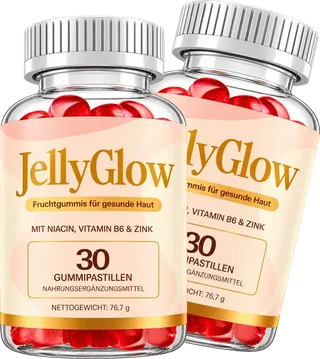
JellyGlow Gummies zinc is the smallest of the three nutrients named on the jar: 1.5 mg per gummy, from zinc citrate. That is 15% of the EU reference value on the label and about 14% of the US Daily Value. Zinc is named on the front of the label, yet the amount is modest, so this page puts it in proportion, then covers the limits and the medicines worth asking about.
How much zinc is in JellyGlow Gummies?
Each gummy contains 1.5 mg of zinc, and the label prints that as 15% of the EU Nutrient Reference Value. At one gummy a day, it is 1.5 mg a day from this product.
Zinc is the third row of the label's Nutritional Information, after niacin and vitamin B6, and the third nutrient in the front-of-label line "WITH NIACIN, VITAMIN B6 & ZINC". Of the three, it is the only one that falls well short of 100% of its reference value. The nutrition facts page shows all nine rows together.
What form of zinc do JellyGlow Gummies contain?
The zinc comes from zinc citrate, listed thirteenth on the label's ingredient list, between carnauba wax and pyridoxine hydrochloride. Zinc citrate is a zinc salt commonly used in supplements.
The label prints the zinc amount (1.5 mg), not the weight of zinc citrate used to supply it. That is standard practice: the panel reports the mineral, while the ingredient list names the compound. For the full ingredient order and what every item is, see the ingredients page.
080160 % of limit
One gummy keeps all three under their limits. A second gummy, or a multivitamin with niacin, can push niacin past its 35 mg limit from supplements, which NIH applies to nicotinamide too.
Show the numbers
| Item | Value |
|---|---|
| Niacin, 1 gummy | 71% of 35 mg |
| Niacin, 2 gummies | 143% of 35 mg |
| Zinc, 1 gummy | 4% of 40 mg |
| Vitamin B6, 1 gummy | 2% of 100 mg |
Source: JellyGlow label (amounts per gummy); NIH Office of Dietary Supplements (upper limits).
What is 1.5 mg of zinc in US % Daily Value?
About 14%. FDA's Daily Value for zinc is 11 mg,1 and 1.5 divided by 11 gives roughly 13.6%, which rounds to 14%.
The label's 15% comes from the EU reference value, which is slightly lower than the US figure. A one-point gap is small, but it is a useful reminder that the percentages on this jar were calculated for European shoppers. The table below gathers every yardstick in one place.
| Measure | Reference amount | 1.5 mg as a share |
|---|---|---|
| EU % NRV (printed on label) | EU reference value | 15% |
| US % Daily Value (our arithmetic) | 11 mg | about 14% |
| Adult RDA, men | 11 mg | about 14% |
| Adult RDA, women | 8 mg | about 19% |
| Adult upper limit | 40 mg | about 4% |
Why is zinc named on the front of JellyGlow Gummies if the amount is small?
The label doesn't explain its choice of front-of-jar nutrients; it simply lists all three vitamins and minerals in the line "WITH NIACIN, VITAMIN B6 & ZINC". Being named on the front tells you zinc is present, not how much.
That's a useful habit for reading any supplement label. A front line or a band is a summary, while the Nutritional Information box carries the measured amounts. Here the box shows 156% NRV for niacin, 143% for B6 and 15% for zinc, so three nutrients that look equal on the front are very unequal on the panel. Our label page walks through every printed line, front to back.
How does JellyGlow Gummies zinc compare with what adults need?
It covers a small share of the recommended amount. The NIH Office of Dietary Supplements sets the adult RDA at 11 mg a day for men and 8 mg a day for women,2 so one gummy supplies roughly a seventh to a fifth of it.
In other words, the gummy is not built as a zinc supplement. Most of an adult's zinc comes from food, and the 1.5 mg here is a small addition. If you were relying on this product to cover a zinc need your doctor has flagged, it would not do that, and the label makes no such claim.
How close is JellyGlow Gummies zinc to the upper limit?
Not close. The NIH sets the adult upper limit at 40 mg of zinc a day,2 and one gummy is about 4% of that.
Zinc only becomes a concern when several products are stacked, especially a dedicated zinc supplement or zinc lozenges. The NIH lists the effects of too much zinc as nausea, dizziness, headaches, stomach upset, vomiting and loss of appetite.2 Those come from intakes far above the 1.5 mg in a gummy, but they are the reason to keep a running total.
Can JellyGlow Gummies zinc affect copper?
At 1.5 mg a day, there is no reason to expect it to; the NIH's concern starts at much higher intakes. It notes that taking 50 mg of zinc or more a day for weeks can interfere with how the body handles copper.2
That is more than thirty times the amount in a gummy. The figure is still worth knowing if you also take a high-dose zinc product, because the two together could approach it. Our stacker below makes that sum quick.
How do you add up zinc from JellyGlow Gummies and other products?
Add 1.5 mg for the gummy to the zinc in each of your other supplements, then compare the total with the 40 mg adult upper limit. The stacker does the arithmetic and shows niacin and vitamin B6 at the same time.
Type in the zinc, niacin and B6 amounts from the other labels in your cupboard, and it shows each total against the adult upper limits: 35 mg niacin, 40 mg zinc and 100 mg vitamin B6. It cannot account for your health or your medicines, so take its result to your pharmacist if anything looks high.
Tool · Stacker
Niacin, zinc and B6 stacker
One JellyGlow gummy is counted for you. Add what your multivitamin or other supplements list per day to see the total against the adult upper limits from NIH (35 mg niacin from supplements, 40 mg zinc, 100 mg vitamin B6). Bars run from 0 to 200% of each limit; the marker is 100%.
Products that often contain zinc:
- Multivitamins and mineral formulas
- Stand-alone zinc tablets and zinc lozenges
- Products sold for skin, hair or nails
- Some fortified cereals and drinks
A quick example: one gummy (1.5 mg) plus a multivitamin with 11 mg comes to 12.5 mg, about 31% of the upper limit. Add a 25 mg zinc tablet and the day reaches 37.5 mg, close to the 40 mg line. Here, as on our niacin and vitamin B6 pages, the total is the number to watch.
What happens to the zinc if you take two JellyGlow Gummies?
Two gummies would give 3 mg of zinc, still under a tenth of the 40 mg adult upper limit.2 Zinc isn't the problem with doubling up; niacin is.
Two gummies supply 50 mg of niacin, which goes over the 35 mg adult upper limit for supplemental niacin.5 That is why the label's "do not exceed recommended dose" matters even though the zinc figure looks harmless. If you miss a day, simply carry on with one gummy the next day.
Which medicines should you ask about with JellyGlow Gummies zinc?
The NIH lists interactions between zinc and quinolone antibiotics, tetracycline antibiotics, penicillamine and thiazide diuretics.2 If you take any of these, ask your pharmacist how a zinc-containing product fits with your medicine.
Quinolones and tetracyclines are two families of antibiotics, and thiazide diuretics are a type of water tablet; if a medicine's name is unfamiliar, the leaflet in the box usually names its class. A pharmacist can tell you whether timing matters for you. NCCIH advises telling all your providers about every supplement you use, because some medication and supplement interactions can be serious.3 The medications page lists the questions for every active in the gummy.
What does the seller say about zinc in JellyGlow Gummies?
The seller's page also quotes EU claim wording for zinc and vitamin B6, citing the EU's list of permitted health claims for foods.4 Neither wording appears on the label, and we don't present it as a claim of our own.
The EU list sets out the sentences a food may use about a nutrient; it does not test any particular product. The label's only claim-type statement concerns niacin, and the skin claim page explains it. The seller's page also states that it does not promise anti-ageing effects and that its comparison table says the gummies do not remove wrinkles. We report the zinc as an amount: 1.5 mg.
Should JellyGlow Gummies replace a zinc supplement?
No. If you take zinc on medical advice, keep to that plan and don't swap it for these gummies. At 1.5 mg, one gummy is a small fraction of the adult RDA, and the product is not presented as a zinc source.
Equally, if you already take a zinc supplement and want to add the gummies, the extra 1.5 mg is unlikely to change your total much, but it still counts. Check the sum with the stacker and mention the gummies at your next appointment.
Where can you buy JellyGlow Gummies?
They are sold by an EU-based seller, and when we checked, the seller's shipping page listed delivery to Germany only. US delivery is not confirmed; email [email protected] before ordering from outside Germany.
When you're ready, you can check the packs on the seller's page. When we checked, the seller's order buttons used an unfinished link; if a button fails, contact the helpdesk. The shipping page explains what the seller lists for delivery, or open the seller's page directly.
Questions people ask
How much zinc is in JellyGlow Gummies?
1.5 mg per gummy, printed as 15% NRV on the label. In US terms it is about 14% of the 11 mg Daily Value.
What form of zinc do JellyGlow Gummies contain?
Zinc citrate. It is the thirteenth item on the label's ingredient list.
Can JellyGlow Gummies lower copper levels?
Not at the label dose as far as the official guidance goes. The NIH links copper problems to 50 mg or more of zinc a day for weeks, more than thirty times the 1.5 mg in a gummy.
Should I space JellyGlow Gummies apart from antibiotics?
Ask your pharmacist. The NIH lists interactions between zinc and quinolone and tetracycline antibiotics, so the pharmacist can advise on timing for your prescription.
Can JellyGlow Gummies stand in for a zinc supplement prescribed by my doctor?
No. One gummy supplies 1.5 mg, a small share of the adult RDA, so keep to the plan your doctor gave you.
Sources for this page
- FDA: Daily Value on the Nutrition and Supplement Facts Labels. www.fda.gov
- NIH Office of Dietary Supplements: Zinc, Health Professional Fact Sheet. ods.od.nih.gov
- NCCIH: Some Medication-Supplement Interactions Can Be Serious. www.nccih.nih.gov
- EUR-Lex: Commission Regulation (EU) No 432/2012, list of permitted health claims made on foods. eur-lex.europa.eu
- NIH Office of Dietary Supplements: Niacin, Fact Sheet for Health Professionals. ods.od.nih.gov
These statements have not been evaluated by the Food and Drug Administration. This product is not intended to diagnose, treat, cure, or prevent any disease. Safety: JellyGlow Gummies are a food supplement sold in the EU, not a medicine. Adults 18+ only; the label says one gummy once a day and not to exceed it. Not for pregnant or nursing women. The panel lists niacin (as nicotinamide), vitamin B6, zinc, maca, L-citrulline, L-carnitine and small amounts of grape seed, Panax ginseng and rhodiola extracts, which can matter with diabetes, blood-thinning, blood pressure, seizure or antibiotic medicines or before surgery. Ask your doctor or pharmacist first, never stop prescribed treatment, and keep the jar away from young children. This site is an independently run information site about JellyGlow Gummies; the owner states it is a U.S. stocking partner for JellyGlow. It is not the maker or the seller. We may earn money when you order through links marked as sponsored. The seller is based in the EU and sets prices, shipping and refund terms; we show them as we found them, so confirm at the live checkout.
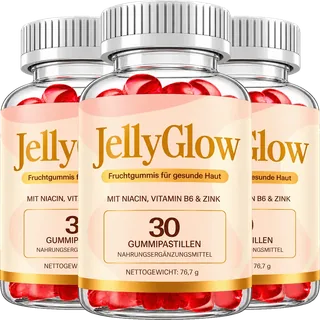
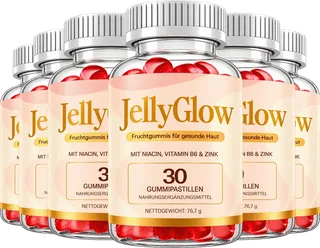
 30-day money-back guarantee
 No subscription
