
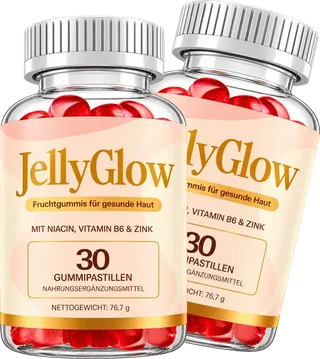
JellyGlow Gummies are a labelled fruit-gummy food supplement sold by an EU seller, and searching “JellyGlow Gummies scam” is a sensible thing to do before paying for any supplement online. We are not calling the product a scam, and we have no evidence that it is one. This page explains the tricks that show up around skin gummies in general, how to spot each one, what the seller's page does and does not show, and what to do if an order goes wrong.
Is JellyGlow Gummies a scam?
We have found no evidence that JellyGlow Gummies are a scam, and we do not call them one. The label is complete, the EU distributor and a returns address are printed on it, and the seller states its prices and refund terms in writing.
What we did find are gaps worth asking about: the seller's legal notice showed unfilled template fields, the order buttons used an unfinished link, and delivery is listed to Germany only. Gaps like these are reasons to ask questions, not proof of fraud. Our is it legit checklist lists every confirmed and open item.
The bigger risk for shoppers is usually not the product itself but the pages around it: copies, fake badges and ads that use the product name to sell something else.
What scam patterns show up around skin gummies online?
The same handful of tricks appear again and again around beauty supplements, whatever the brand. Knowing them makes them easy to spot.
- Fake badges. Seals like “FDA registered”, “FDA approved” or “made in USA” placed beside a product whose label carries none of them.
- Made-up numbers. Large customer counts and precise star averages with no list of individual, dated reviews behind them.
- Fake celebrity endorsements. Ads that borrow a famous face or a TV-show style story the person never gave.
- Look-alike pages. Sites that copy the product name, photos and colors but send you to a different checkout.
- Expired or invented coupons. Pages promising codes that never apply, used to pull you into a purchase or collect your email.
- Result timelines. Promises such as “visible results in two weeks” that no label or study supports.
- Pressure tactics. Countdown clocks, “only 3 left” banners and claims that a price ends tonight.
The FTC describes unsupported health claims and fake or procured reviews as real problems in health marketing.2 Any one of these patterns is a reason to close the tab and start again from a source you trust.
How do you spot a fake badge?
Compare the badge with the label. The JellyGlow Gummies label shows a gold wordmark on a peach-and-blush background, a nutrition panel, an ingredient list, cautions and the distributor's details. It carries no seals or badges of any kind.
So a page that shows an FDA seal, a country-of-manufacture shield or a quality-standard stamp next to this product is adding something the label does not have. FDA does not approve dietary supplements for safety or effectiveness before they are sold, which means a genuine “FDA approved” supplement badge does not exist.3 The label page shows every element that is actually printed.
How do you spot made-up review counts and star scores?
Ask to see the individual reviews behind the number. A real average comes from reviews you can read one by one, with names or initials, dates and details.
For JellyGlow Gummies, the seller's page shows no reviews, star ratings or before-and-after photos, and says the product is new. The only reviews we know of are three supplied by the site owner, not verified by us, which you can read on our customer reviews page. So when you see a large customer count or a decimal star score attached to this product, it did not come from the seller's page.
How do you spot a look-alike page or a fake ad?
Check where the buy button leads before you enter card details. A look-alike page often reuses the product photos but routes payment through an unrelated checkout, sometimes in another currency.
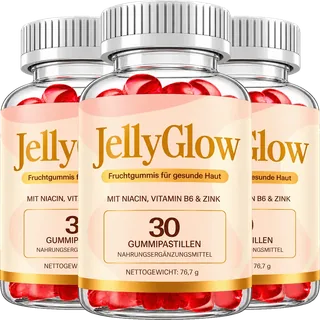
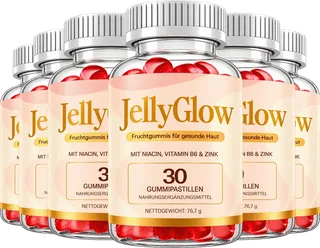
The genuine seller lists [email protected] as its contact and offers only 2-, 3- and 6-jar packs. If a page quotes other pack prices, offers a single jar, pushes a subscription or shows celebrity quotes, it does not match what the seller's page showed when we checked. Ads that feature a famous person's endorsement deserve particular doubt; FTC guidance covers endorsements and requires that health claims, including those in testimonials, be backed by competent and reliable scientific evidence.1
What does the seller's page show, and what doesn't it?
The seller's page is plainer than the pages that worry people. This table compares common warning signs with what we saw on it.
| Warning sign | Seen on the seller's page when we checked? |
|---|---|
| Countdown timers or stock warnings | No |
| Star ratings, customer counts or testimonials | No; it says the product is new |
| Before-and-after photos | No |
| Celebrity endorsements | No |
| Seals such as FDA or country-of-manufacture badges | No |
| Promises about ageing skin | No; the seller says it does not promise anti-ageing effects |
| Subscription or hidden recurring charge | No; one-time payment |
| Filled-in legal notice with operator name | No; template fields were unfilled |
| Working order buttons | Uncertain; they used an unfinished link |
| Delivery to the United States | Not listed; Germany only |
The first seven rows are reassuring. The last three are why we keep recommending a short email to the helpdesk before ordering. Unfinished pages and a single listed delivery country are common on new shops, but they leave you without answers you would normally expect before paying, so get those answers in writing first.
How can you check a claim you saw in an ad?
Check it against the label and the seller's page; if it appears on neither, the product does not make that claim. The claim sorter below does this for you.
Tap a phrase you have seen in an ad or on another page, and the sorter shows whether it is printed on the JellyGlow label, said by the seller, or not claimed at all. Most of the bold promises you meet online fall into the last group.
Tool · Claim sorter
Claim sorter: label, seller or nobody?
Tap a phrase you have seen on a label, an ad or a sales page. The sorter says whether it is printed on the JellyGlow label, said on the seller's page, or not claimed by either, and what that means.
- On the label
- Seller's page only
- Not claimed
Pick a phrase.
How can you protect yourself when ordering?
Pay in a way that gives you recourse, and keep a paper trail from the first click. These habits cost nothing and help with any online purchase.
- Pay by credit card rather than bank transfer, gift card or crypto.
- Screenshot the product page, the price and the terms on the day you order.
- Save the order confirmation and every email from the helpdesk.
- Write down the date the parcel arrives; the 30-day guarantee and the 14-day withdrawal right both count from receipt.
- Never ship anything back without written return instructions.
Our guarantee page explains how a claim works, and the customer service page lists every contact.
What if an order goes wrong?
Contact the seller first, in writing, at [email protected], and give it a fair chance to fix the problem. Describe the issue, include your order number and keep a copy.
If the seller does not respond or refuses a refund you are entitled to under its written terms, a card dispute (often called a chargeback) is a general last-resort option through your card issuer. Rules and time limits vary by issuer, so ask your bank how its process works and what evidence it wants. The emails and screenshots you kept become that evidence.
A phone line, +1 (302) 200-3480, is listed by the site owner for order questions, but the seller's own pages list no phone and claims go by email, so keep the important steps in writing.
Where can you report a supplement scam or a bad product?
Report deceptive ads, fake reviews or fake endorsements to the FTC, and report health problems or product issues with a supplement to FDA.23 The two agencies cover different sides of the same problem.
A health concern comes first: if you feel unwell after taking any supplement, stop and contact a clinician before anything else. Our side effects page lists what official sources report for each ingredient.
What is the safest way to buy if you decide to go ahead?
Start from the seller's page rather than an ad, confirm delivery to your address in writing, and check the total at checkout before paying. If something on a page does not match the label, leave it.
When those boxes are ticked, you can open the seller's page from here and compare it with what this site describes. If anything differs, ask the helpdesk before you pay.
Questions people ask
Is the JellyGlow Gummies website a scam?
We have no evidence that it is, and we do not call it one. The seller's legal notice showed unfilled template fields when we checked, so ask the helpdesk who the operator is before ordering.
Are JellyGlow Gummies celebrity ads real?
We know of no celebrity endorsement on the label or the seller's page. Read any ad that uses a famous face to sell the product as unverified.
Do JellyGlow Gummies have a hidden subscription?
Not on the seller's page when we checked: it described a one-time payment with no subscription. If a checkout adds recurring billing, stop and contact the helpdesk.
Where do I report a problem with JellyGlow Gummies?
Order and refund problems go to [email protected] first. Health problems with a supplement can be reported to FDA, and deceptive advertising to the FTC.
Are JellyGlow Gummies coupon codes legit?
We have seen no coupon code from the seller. Pages promising codes may be out of date or invented, so rely on the price shown at the live checkout.
Sources for this page
- Federal Trade Commission: Health Products Compliance Guidance. www.ftc.gov
- Federal Trade Commission: Health claims (business guidance). www.ftc.gov
- U.S. Food and Drug Administration: Dietary Supplements. www.fda.gov
These statements have not been evaluated by the Food and Drug Administration. This product is not intended to diagnose, treat, cure, or prevent any disease. Safety: JellyGlow Gummies are a food supplement sold in the EU, not a medicine. Adults 18+ only; the label says one gummy once a day and not to exceed it. Not for pregnant or nursing women. The panel lists niacin (as nicotinamide), vitamin B6, zinc, maca, L-citrulline, L-carnitine and small amounts of grape seed, Panax ginseng and rhodiola extracts, which can matter with diabetes, blood-thinning, blood pressure, seizure or antibiotic medicines or before surgery. Ask your doctor or pharmacist first, never stop prescribed treatment, and keep the jar away from young children. This site is an independently run information site about JellyGlow Gummies; the owner states it is a U.S. stocking partner for JellyGlow. It is not the maker or the seller. We may earn money when you order through links marked as sponsored. The seller is based in the EU and sets prices, shipping and refund terms; we show them as we found them, so confirm at the live checkout.
 30-day money-back guarantee
 No subscription
