
Niacinamide vs niacin is a question about two forms of the same vitamin: niacinamide (also called nicotinamide) and nicotinic acid, which most people simply call niacin. NIH notes that nicotinamide does not cause the skin flushing seen with nicotinic acid, yet the adult upper limit applies to both.1 JellyGlow Gummies list their niacin as nicotinamide, so this is the form to understand before you read the label.
What is the difference between niacinamide and niacin?
Niacinamide and nicotinamide are two names for one compound, while "niacin" is used either as the umbrella word for vitamin B3 or, narrowly, for nicotinic acid. The practical difference is how the body reacts to a supplement dose.
NIH explains that nicotinamide does not cause the flushing that nicotinic acid can cause, and that it has fewer adverse effects overall.1 That is a statement about tolerability, not about any benefit. Labels also vary in how they write the name, which is why the ingredient list matters more than the front panel.
If you have seen both words on shop shelves, that is the reason. One brand writes "niacinamide", another writes "nicotinamide", and a third writes only "vitamin B3". Reading the ingredient line, not the headline, tells you which compound is inside and keeps the comparison honest.
Does the 35 mg upper limit apply to niacinamide too?
Yes: the adult upper limit of 35 mg a day from supplements and fortified food applies to both supplemental forms, including nicotinamide.1 The limit does not apply to people taking niacin under medical supervision, which is a separate situation.
This is the point people most often miss, and so it is worth comparing the panel amount with the limit, not with how a form is described. A form that does not cause flushing can feel gentler, but the ceiling stays where it is. NIH also lists the recommended daily amounts for adults: 16 mg NE for men and 14 mg NE for women, and notes that most people get enough from food.2
| Question | Nicotinamide (niacinamide) | Nicotinic acid |
|---|---|---|
| Common label wording | Niacinamide, nicotinamide | Niacin, nicotinic acid |
| Skin flushing | Not caused, per NIH | Can occur |
| Adult upper limit | 35 mg a day | 35 mg a day |
| Recommended amount, adults | 16 mg NE men, 14 mg NE women | Same |
Which form do JellyGlow Gummies contain?
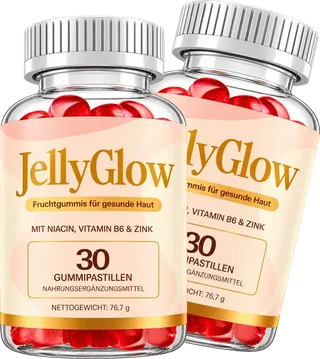
JellyGlow Gummies list nicotinamide in the ingredient list, and the nutrition panel prints niacin (B3) at 25 mg NE per gummy. The label asks adults to take one gummy once a day.
Set against the limit above, 25 mg is 71% of 35 mg, and two gummies would reach 143%. We do not know how much niacin you may already take from other products, which is why a quick tally helps. Food counts too, though NIH says most people already get enough niacin from what they eat, so a supplement adds to an intake that is often adequate.2 Our niacin page goes through the amounts in more detail, and the ingredients page shows where nicotinamide sits in the list.
How do you add up niacin from several products?
Add the niacin from every supplement and fortified food you use, then compare the total with 35 mg. Multivitamins, energy-style drinks and B-complex tablets often carry niacin too, and the label may call it niacinamide, nicotinamide or niacin.
A simple routine works well:
- Write down each product and the niacin amount on its panel.
- Check whether the unit is mg NE, since niacin is often reported that way.
- Add the figures and compare them with 35 mg.
- Bring the total to a pharmacist if you take medicines or have a condition.
- Keep the list somewhere handy, so the next new product is easy to add.
NCCIH advises telling your providers about everything you take, because "natural" does not mean safe and some supplements interact with medicines.3 The jar's own caution says to consult a physician before use, especially with a medication or medical condition, and that it is not for anyone under 18 or for pregnant or nursing mothers.
Does the form change what we can say about the gummy?
No. The form tells you about tolerability and the limit, not about what a finished product does, and we found no study of the gummy itself. We make no claims about skin or anything else here.
The label does print one statement under a dagger, which is EU claim wording drawn from the EU's permitted list, and FDA has not evaluated it.4 If you want that explained, see how EU claim wording works. Our own reading stays narrower: the label lists nicotinamide, 25 mg NE, and the numbers above follow from that.
One practical note for US readers: the seller lists delivery to Germany only, and shipping to the US is not confirmed. If you are weighing a purchase, check the seller's page for current terms before you rely on anything here, and read our where to buy page first.
Questions people ask
Is the niacin in JellyGlow Gummies niacinamide?
Yes, the label's ingredient list names nicotinamide, which is the same compound as niacinamide. The panel prints it as niacin (B3) at 25 mg NE per gummy.
Do JellyGlow Gummies cause niacin flushing?
NIH says nicotinamide does not cause the flushing associated with nicotinic acid.1 We cannot speak to individual experience with JellyGlow Gummies, so ask a pharmacist if you have concerns.
How much of the niacin limit is one of the JellyGlow Gummies?
One gummy at 25 mg NE is 71% of the 35 mg adult upper limit. Other supplements you take count toward the same limit.
Should I check with a pharmacist before taking JellyGlow Gummies with other B vitamins?
It is a sensible step, particularly if you take medicines. Bring the niacin amounts from each product so the total can be checked against 35 mg.
Sources for this page
- NIH Office of Dietary Supplements: Niacin, Fact Sheet for Health Professionals. ods.od.nih.gov
- NIH Office of Dietary Supplements: Niacin, Fact Sheet for Consumers. ods.od.nih.gov
- NCCIH: Using Dietary Supplements Wisely. www.nccih.nih.gov
- FDA: Structure/Function Claims. www.fda.gov
These statements have not been evaluated by the Food and Drug Administration. This product is not intended to diagnose, treat, cure, or prevent any disease. Safety: JellyGlow Gummies are a food supplement sold in the EU, not a medicine. Adults 18+ only; the label says one gummy once a day and not to exceed it. Not for pregnant or nursing women. The panel lists niacin (as nicotinamide), vitamin B6, zinc, maca, L-citrulline, L-carnitine and small amounts of grape seed, Panax ginseng and rhodiola extracts, which can matter with diabetes, blood-thinning, blood pressure, seizure or antibiotic medicines or before surgery. Ask your doctor or pharmacist first, never stop prescribed treatment, and keep the jar away from young children. This site is an independently run information site about JellyGlow Gummies; the owner states it is a U.S. stocking partner for JellyGlow. It is not the maker or the seller. We may earn money when you order through links marked as sponsored. The seller is based in the EU and sets prices, shipping and refund terms; we show them as we found them, so confirm at the live checkout.
 30-day money-back guarantee
 No subscription
